A Destination, Not a Stopover
Askole is a logistics stop on the way to K2. Hushe is a living village surrounded by technical peaks, with its own culture, agriculture and mountaineering heritage.
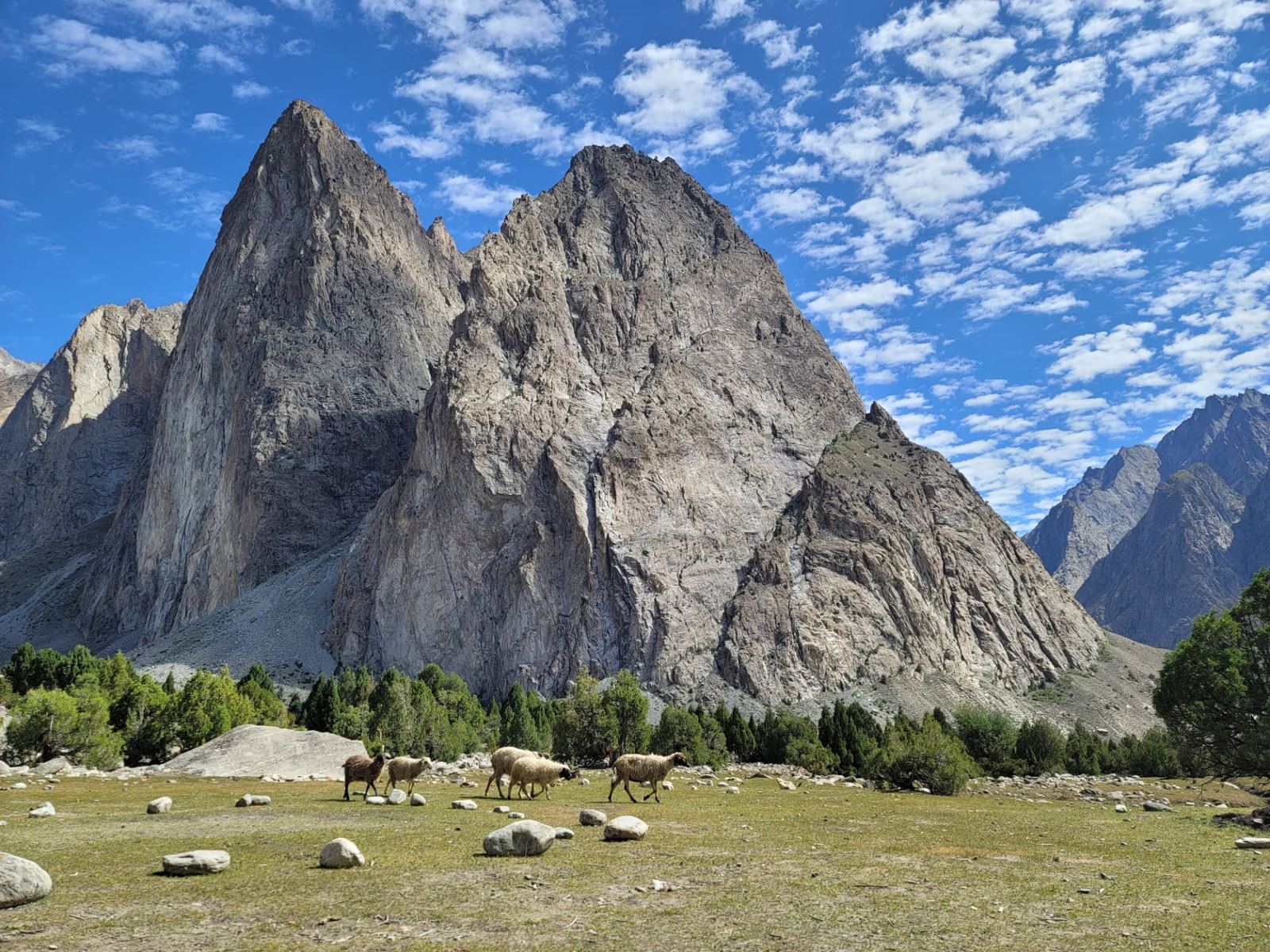
Hushe Valley, Where Granite Meets Glacier
3,100 metres, six glacier systems and four peaks above 6,000m within a day's walk.
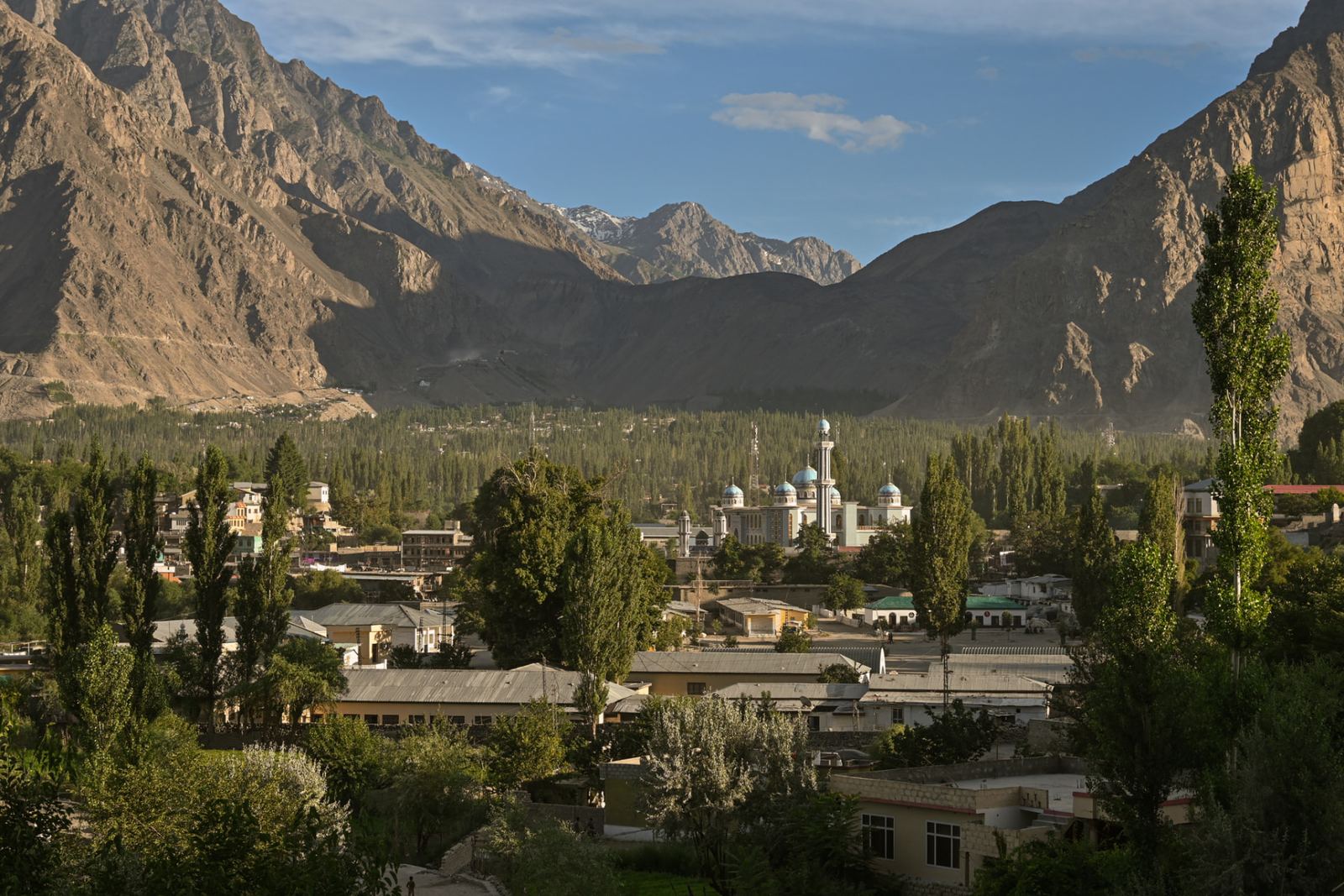
The journey from Skardu takes six to eight hours: four hours on paved road to Khaplu, then two more by jeep on an unpaved track into the valley. That final stretch is the filter, it separates those who want convenience from those who want something real.
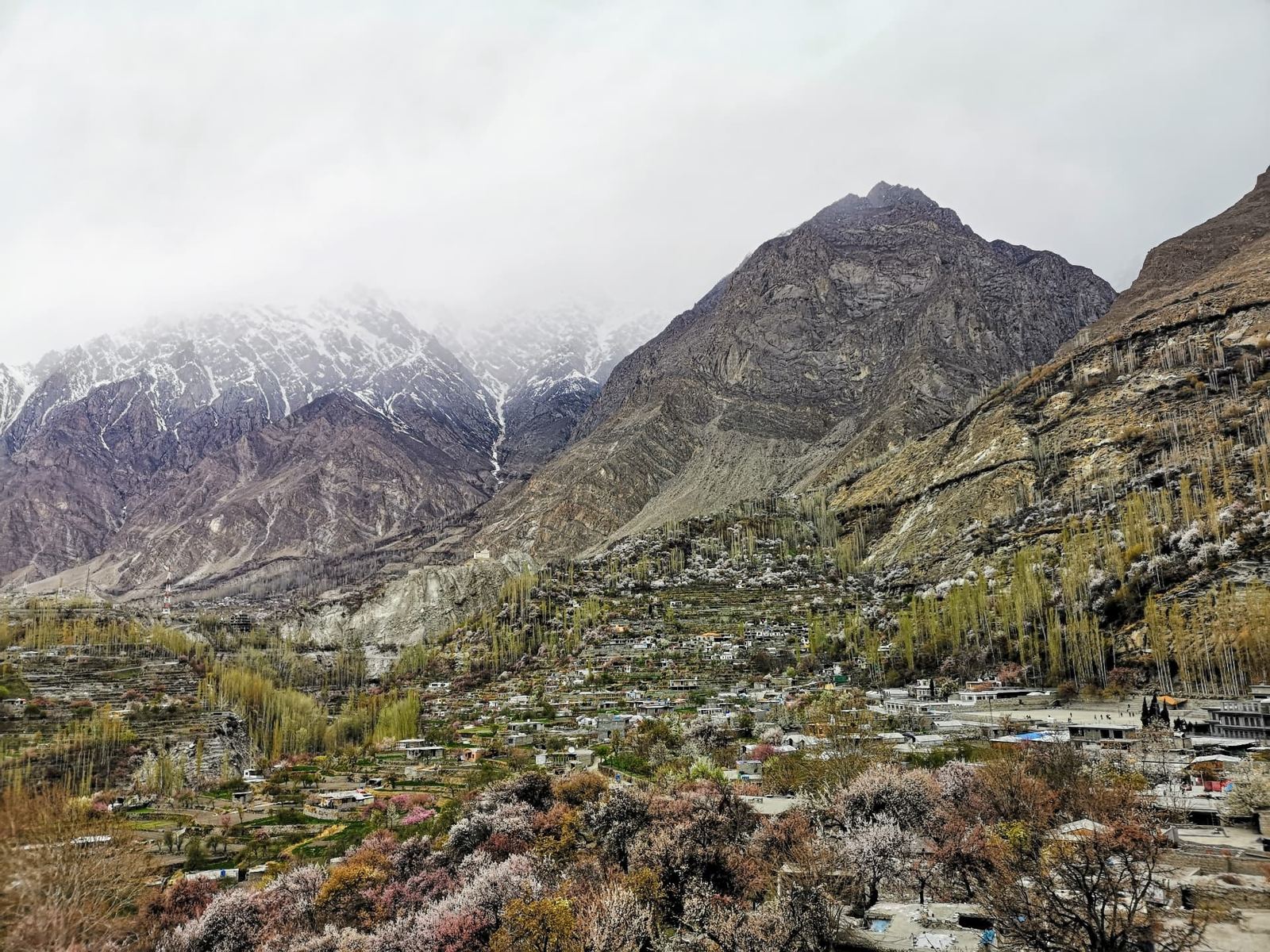
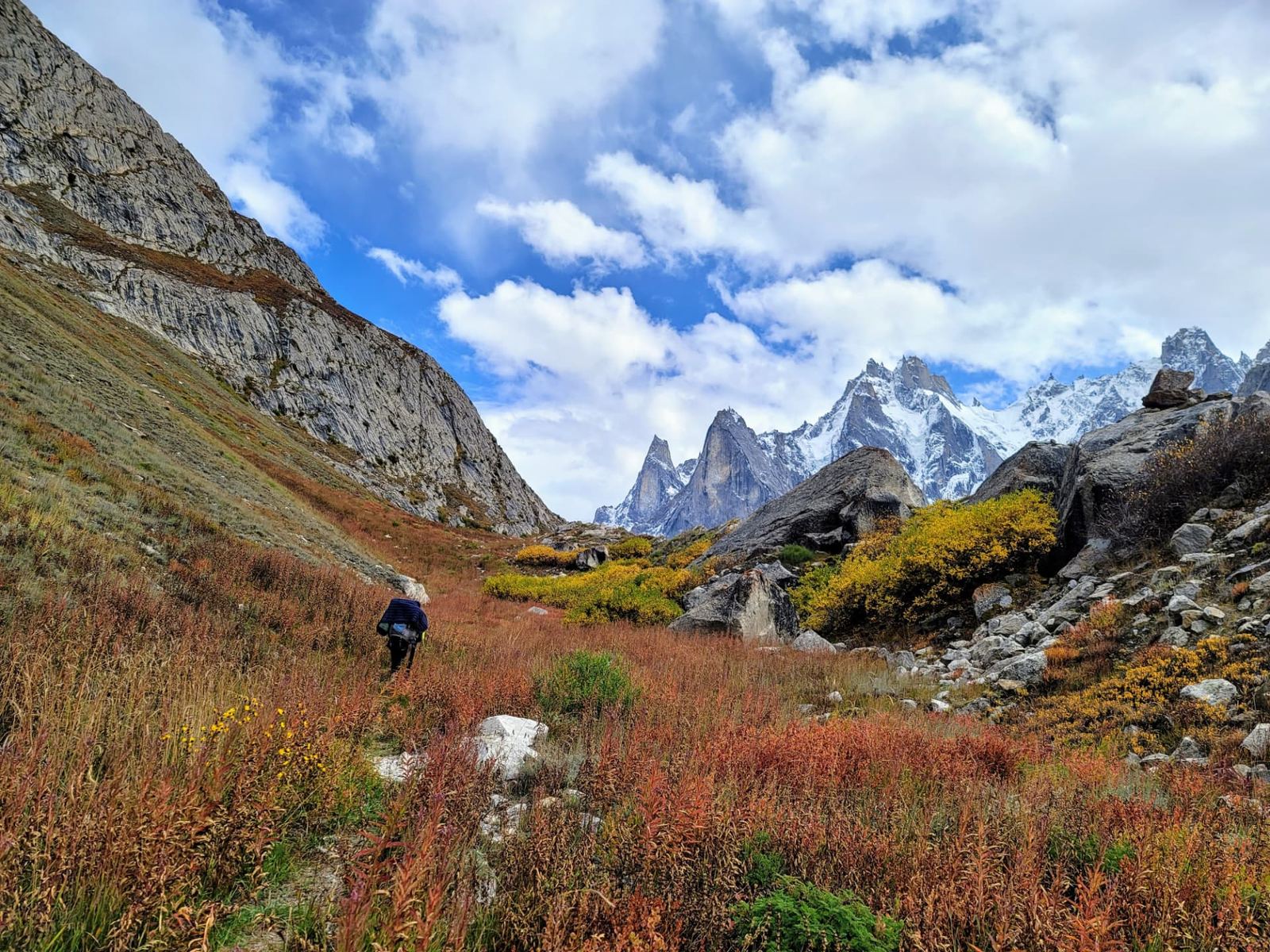
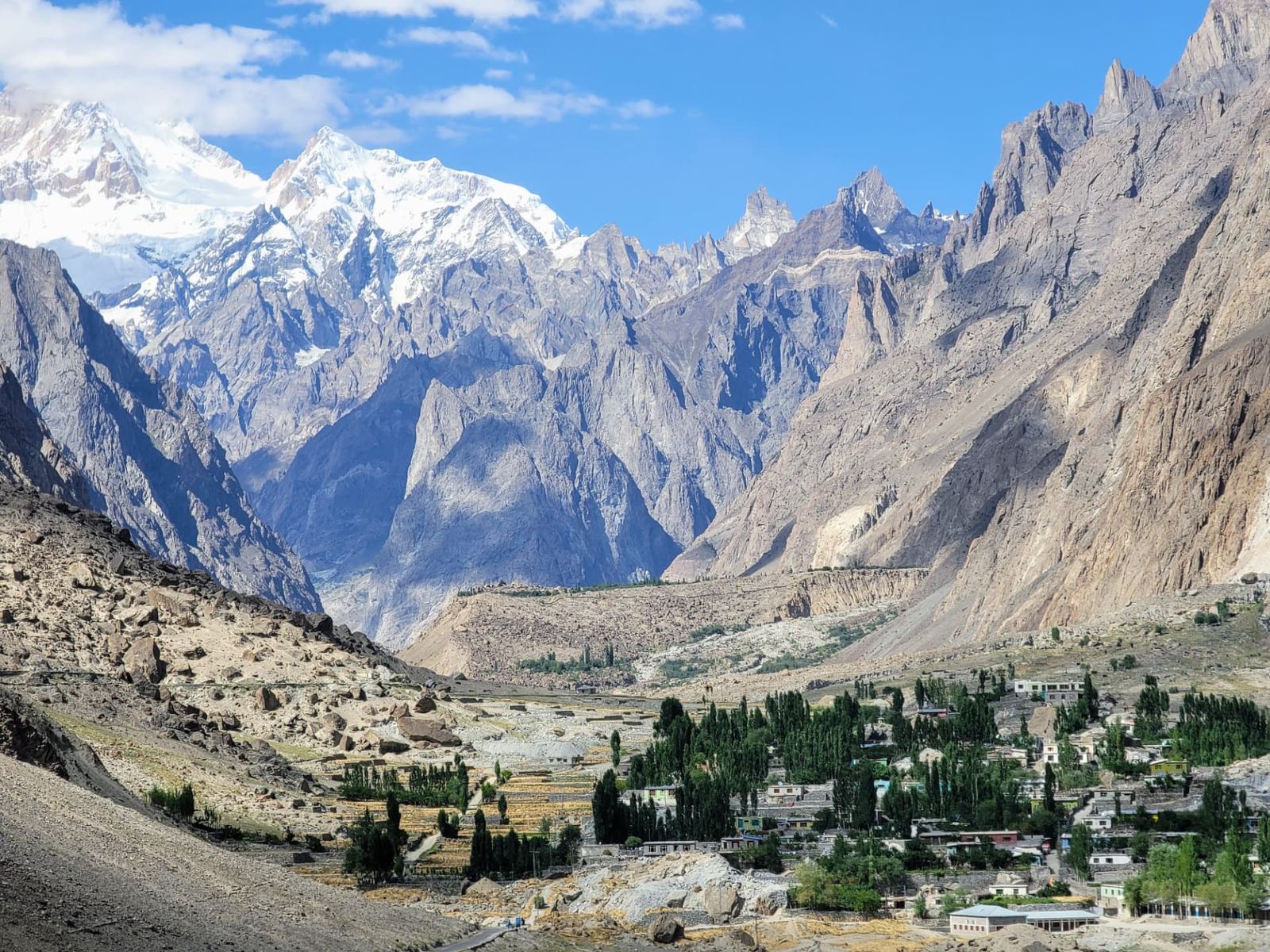
The numbers here are extraordinary. Over 5,000 metres of vertical relief within a compact area. Four peaks above 6,000 metres within a day's walk of the village. Six major glacier systems: Aling, Masherbrum, Hushe, Gondogoro, Chogolisa and Tsarak Tsa. Masherbrum, the Queen of the Karakoram, dominates the skyline, while K6 (7,282m) and K7 (6,934m) rise from the Charakusa Valley to the south and Laila Peak (6,237m) draws both climbers and trekkers.
Very few places on earth concentrate this much alpine power within reach of a functioning village.
Askole is a logistics stop on the way to K2. Hushe is a living village surrounded by technical peaks, with its own culture, agriculture and mountaineering heritage.
Six major glacier systems and four peaks above 6,000 metres within a day's walk, with over 5,000 metres of vertical relief.
No tourist shops, no queue culture, children walking to school, women working the fields, wheat harvested between granite walls.
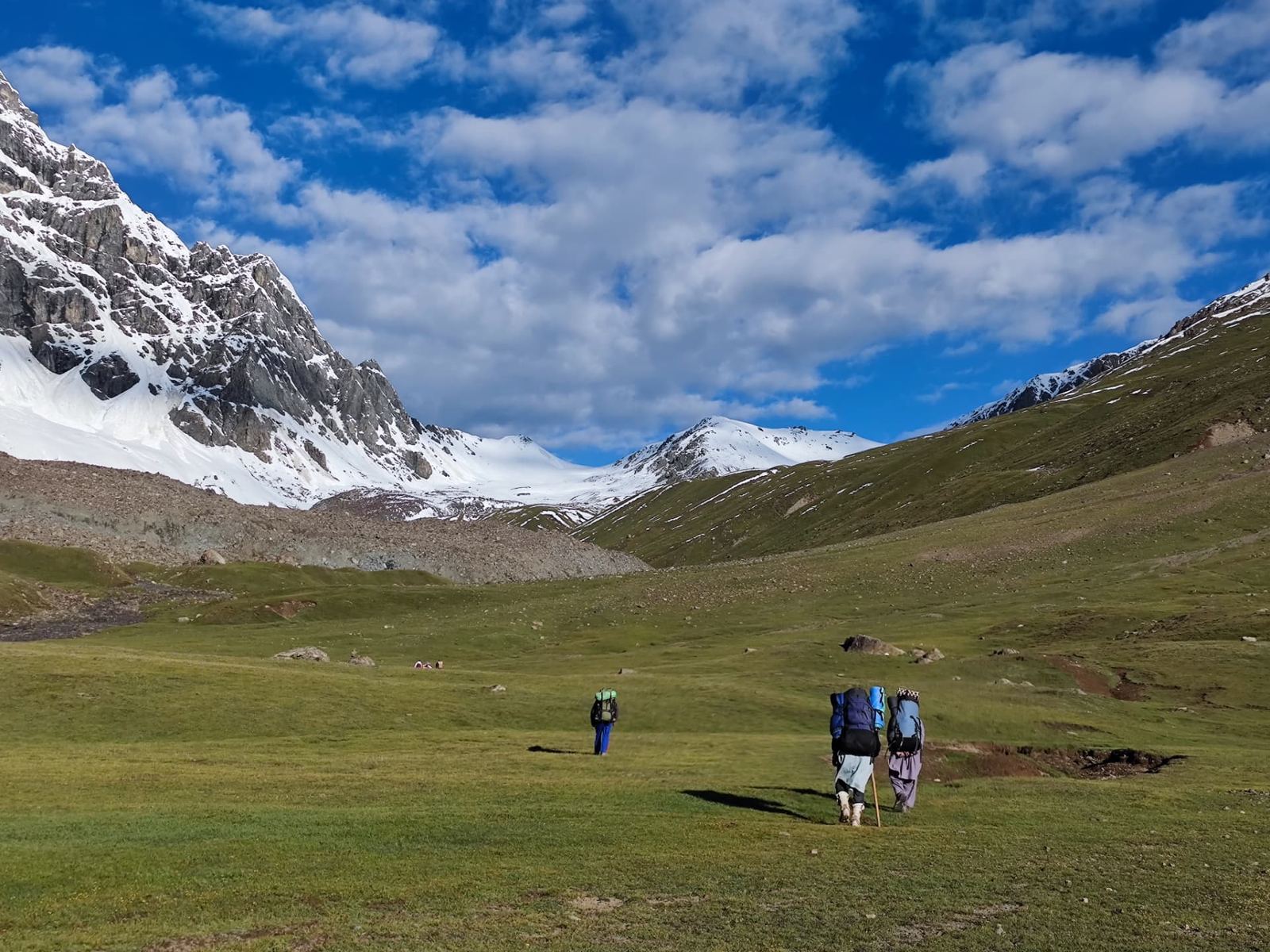
Routes are led by local Balti guides whose families have worked these mountains since the 1960s.
Six to eight hours from Skardu, four hours on paved road to Khaplu, then two more by jeep on an unpaved track into the valley.
We arrange trekking permits for routes toward Masherbrum (K1) Basecamp, the Charakusa Valley and the Gondogoro La in advance of departure.
3,100m at Hushe village, with trekking camps between 3,400m and 4,600m; the Gondogoro La reaches 5,585m.
All journeys run in small groups of up to 12 clients, or fully privately. See our full collection of tour styles or get in touch to plan your dates.
Many years of experience organising Karakoram adventures, with Balti and Hunzai staff from the valleys themselves.
Fair wages for porters, eco-friendly camps and direct community support on every departure.
Certified guides, satellite communication and tested emergency protocols on every route.
3,100m at Hushe village, with trekking camps between 3,400m and 4,600m; the Gondogoro La reaches 5,585m. Read this before you travel. Altitude sickness is entirely preventable when a few simple rules are followed.
Trekking above 2,500 metres involves additional risk not normally associated with lower-level treks. This should not prevent you from undertaking a trek, but it makes sense to learn the dangers and the golden rules that prevent Acute Mountain Sickness (AMS).
Maximum altitudes are listed for every holiday, and the altitude of each camp and pass appears in the daily itinerary. Read the trip notes carefully and judge whether the journey suits your experience. If you have any doubt at all, talk to our office.
The body adapts to a wide range of barometric pressures, but it takes time. Gain height slowly: above 2,500 metres the accepted maximum is 500 metres of sleeping altitude a day, with a rest day where that is not possible. Climb high, sleep low.
There is a direct correlation between daily fluid intake and successful acclimatisation. On treks to 3,000 metres and above, most people need to drink between 4 and 6 litres each day.
Familiarise yourself with the signs and symptoms of AMS before you travel, and report any illness to your trip leader straight away, early reporting is what keeps altitude safe.
Acetazolamide (Diamox) is the only drug currently known to have a useful role in preventing AMS. We recommend carrying it for treks that spend extended periods above 4,000 metres. It is prescription-only, consult your own doctor first.
Travelling to high altitude is not something to be afraid of. Every year thousands of people enjoy the most amazing experiences in the world's greatest mountain ranges, and our guides brief you daily and carry oxygen, first-aid and satellite communication on every departure.
One to two days northeast of the village, beneath the Queen of the Karakoram (7,821m).
Accessed via Saicho junction at 3,350m, leading to the base camps of K6 and K7 over eight to ten days through glaciers reaching 4,600m.
Established as a trekking route in 1986, this pass connects Hushe to Concordia on the Baltoro Glacier near K2.
The white blade of the Karakoram, one of the most photographed silhouettes in Pakistan.
Food, heritage and daily life, the part of Hushe Valley no viewpoint can show you.
Descendants of Tibetan stock whose language carries ancient Tibetan roots, the word "brum" means mountain, giving Masherbrum its name.
Two-storey stone and wood homes with livestock on the ground floor and the family above.
Wheat, barley and apricots grow in terraced fields; every household keeps a female zmo (yak-cow hybrid), and livestock move to pastures of 4,500-5,500m each summer.
Since the 1960s Hushe's men have worked as high-altitude porters, cooks and guides, climbing knowledge passes from father to son. Little Karim, born here, rose from porter to one of Pakistan's most respected mountaineers.
Every route is staffed by Balti guides, cooks and porters from the valley itself.
Visitor numbers here are genuinely low, community encounters remain unscripted, not staged for tourism.
Carry out all waste from glacier camps and respect grazing pastures and irrigation channels.
Combine a K2 Base Camp trek with a high pass crossing, returning through Hushe instead of retracing the Baltoro.
A traditional agricultural village at 3,100m beneath six glaciers, the two worlds exist simultaneously.
Sit with the families who have carried expeditions into the Karakoram for over sixty years.
Custom tours are available across Hushe Valley on your dates, your pace, your interests. Lengthen the trekking days, add a homestay evening, travel privately with family, or combine this valley with another. Our planners design from a blank page, then price it transparently.
Six to eight hours from Skardu, four hours on paved road to Khaplu, then two more by jeep on an unpaved track into the valley.